Background
Development policy must be authoritative and decisive, yet flexible. It must exact a kind of influence that is irrevocable and transformative. An almost seventy-year-old nation must not lack full production capacity in basic food items such as rice, tomatoes, and even onions.
In this essay, I interrogate the stark paradox of Agricultural policy in Ghana. I also take a brief look at the transformative role of light industries on overall economic development in Ghana.
The Paradox of Agricultural Policy in Ghana: PFJ and the FGP
Quite recently, there was news of a food glut including but not limited to rice. The Minster in charge of Agriculture was to state that the country needed about GHS500m to manage the glut. Here is a country that has for so long battled with food insecurity issues. The Ghana Statistical Service has indicated the growing level of Ghanaians who are food insecure. How can a country with a sizeable number of its citizens being food insecure also be the same country suffering a food glut? It speaks to a fundamental issue(s) in agricultural policy in Ghana which this essay will attempt to interrogate.
Planting for Food and Jobs was aimed at food security and job creation. PFJ started off with an input subsidy model until the Government realised that the strain on the country’s finances was that great and therefore unsustainable. Then it shifted to the input credit system (with zero interest). The difference being that the former was an outright subsidy and the later was structured as a credit which was to be paid back by the farmer in kind.
The following crops were of focus to the Government under PFJ:

MOFA (2023)
Increased distribution of certified seeds from 2,000 metric tonnes (MT) in 2016 to 36,000 MT in 2022; increased fertiliser application rate, from 8 kg/ha in 2016 to 25 kg/ha in 2022; and increased amount of land under irrigation from 221,776 ha in 2016 to 231,009 ha in 2022, are but some of the recorded successes of PFJ.
The Interrelated Objective of PFJ II
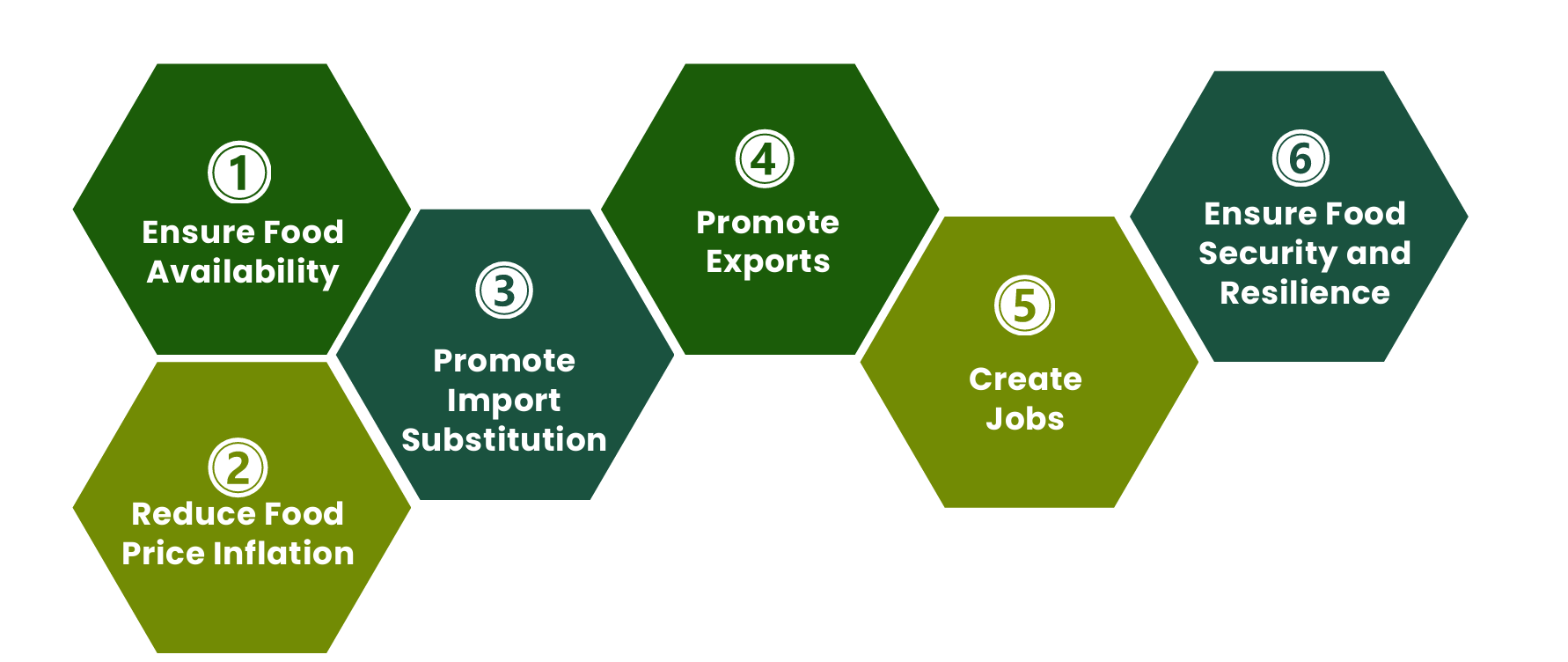
Source: MoFA (2023)
Post-PFJ is also the Feed Ghana Program (FGP), whose interrelated objectives have a striking resemblance to that of the PFJ.
For the stated objectives of the PFJ, the object of food security resilience is [was] the most consequential. Poverty levels in Ghana makes the food security question an evergreen lively discourse. For the low-income earning Ghanaian to be able to afford food, which is affordable but healthy, food produce must attain a low price. It follows therefore, that, to achieve price stability for food items, production must be ramped up, and the cost of production itself must be well contained. That is what PFJ sought to partly achieve. Likewise, the Feed Ghana Programme.
In relation to food inflation, Ghana in recent times has witnessed a positive trend. One only needs to examine the food inflation index to appreciate the positive gains Ghana is making or has made.
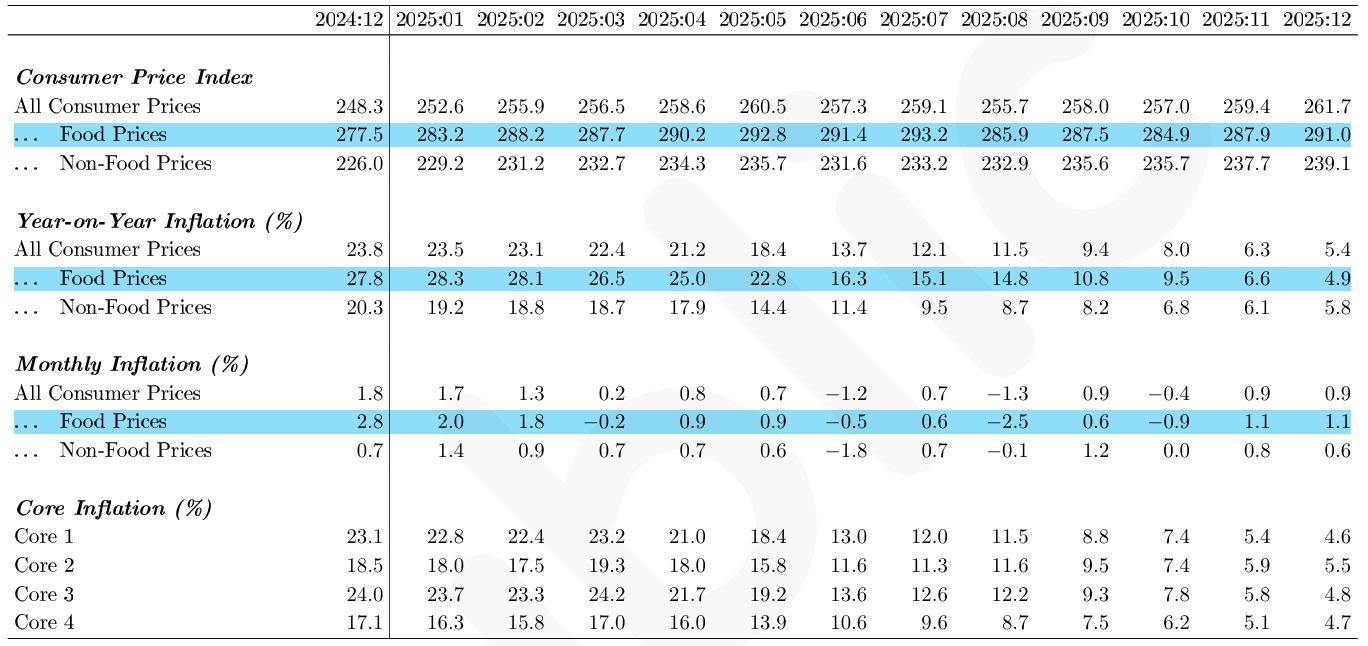
Source: BoG (2026)
I bring up the food inflation narrative to illustrate a point.
It is one thing to argue that there is a food glut (excess production). And the price (affordability) of the produce (with its excess) is also another thing. The trend of food inflation demonstrates that there is a reasonable degree of price stability for a basket of food commodities. But herein lies the paradox: so, there is excess food (including a key staple like rice), and there is price stability of some key food items, but at the same time there is also marked levels of food insecurity among the citizens.
The episode of a food glut of critical food items such as rice and eggs cannot be entertained in anyway when food insecurity continues to be a dire part of the life of Ghanaian citizens. In this sense, the apparent flaw in agricultural policy relates to its inability to secure the nutritional needs of a sizeable portion of the population even amid an excess.
Food Glut and the Food Security Question
It is a fundamental fact that all over the world, value chains as well as supply chains are subject to occasional fragilities. Over-supply of consumer goods are a natural cause of most functional production units. So, lets take the case of rice production and consumption in Ghana.
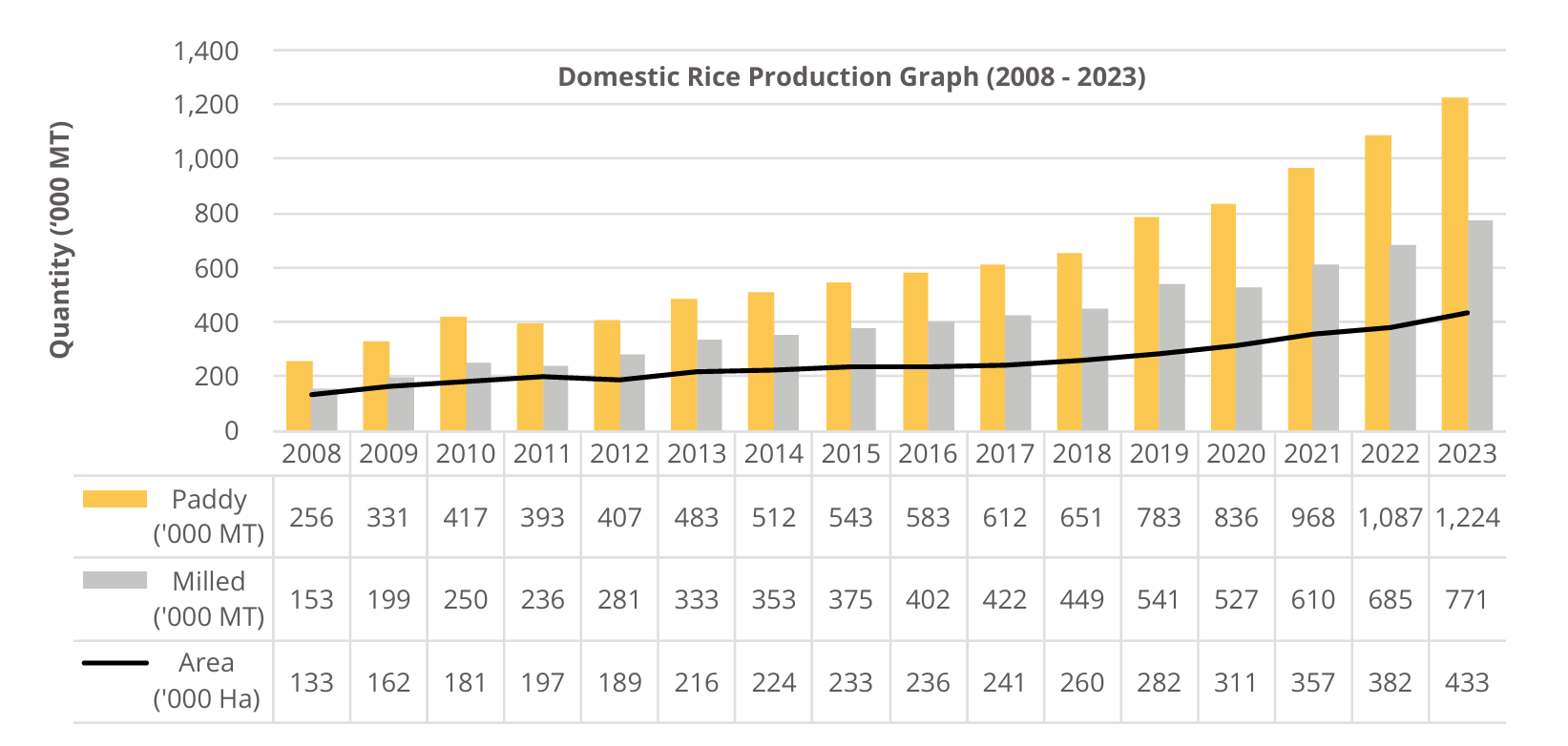
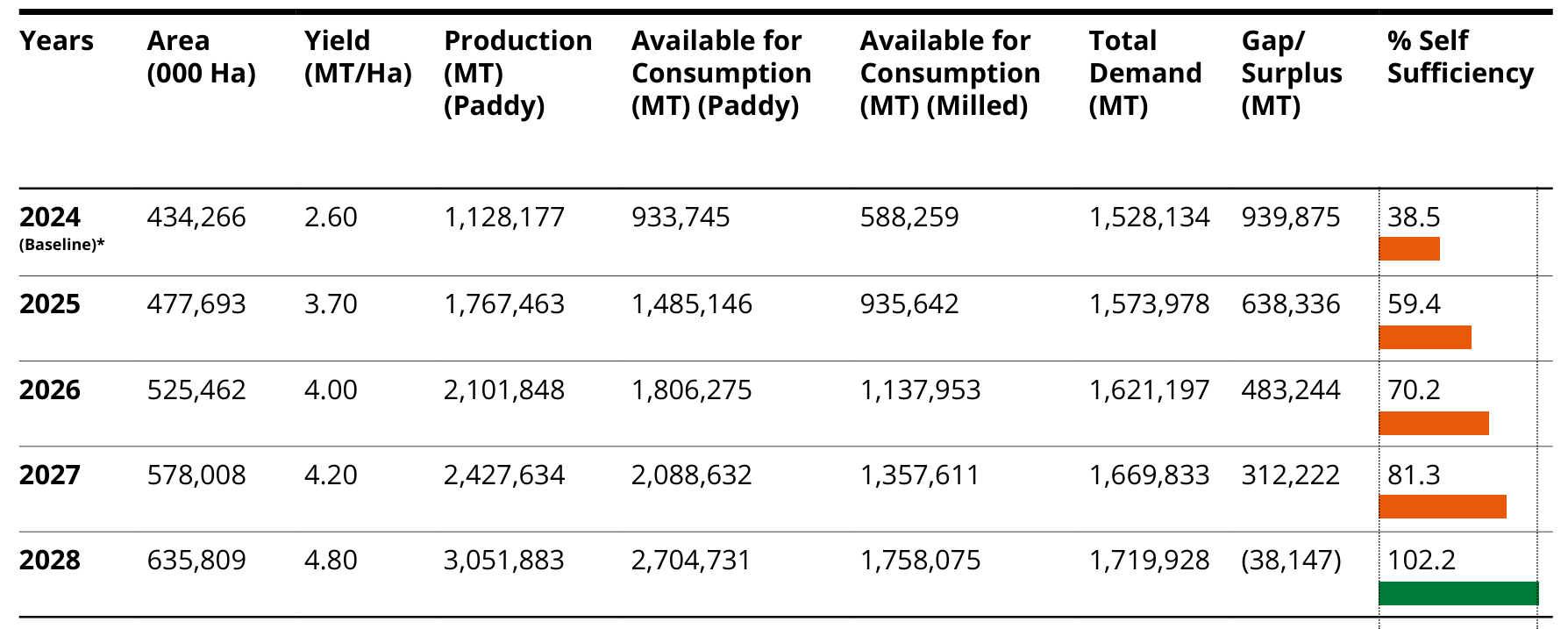
Source: MoFA (2025)
Ghana, for a long time has been unable to produce enough rice to meet local consumption demand. Close to 60% of domestic rice demand is met by imports. GoG over the years has claimed to pursue polices aimed at rice self-sufficiency, such that domestic rice production will just be enough to meet domestic demand. The good intent of political actors can never be in doubt, but in classic Katanomic fashion, the devil is always in the detail. Any talk of boosting domestic rice production to meet demand without a commensurate gradual reduction in rice imports is nothing but a joke of a policy. In Ghana, the rice problem can be stated as follows:
S/N | Foreign/Imported Rice | Locally Produced Rice |
|---|---|---|
1 | Competitive in price | More expensive |
2 | Better quality | Quality could be at par with imports |
3 | Lower production costs | Higher production costs |
4 | Improved Inputs | Low Adoption of Improved Inputs |
5 | Efficiency gains | Inefficient production systems |
To solve the domestic rice production problem, a set of fundamental logics must apply, key of which is to concurrently deal decisively with the inefficient production systems as well as the rice importation issue. And this is also where public policy has failed quite materially.
Government has not enforced its plans and programs to incrementally reduce importation of food items like rice. As such, whilst domestic production is being ramped up, importation exists, and therefore there is an inevitable over-supply. Domestic agricultural enterprises then struggle to compete with foreign brands, and these domestic firms then proceed to extinction. Such an agricultural policy risks becoming only performative and not transformative.
Production Target for Rice, 2024-2028
Source: MoFA (2025)
The Feed Ghana Program hints at achieving self-sufficiency in rice by 2028, and it further indicates that “To promote demand for locally produced and processed rice in Ghana, the import quota system will be strictly enforced, requiring traders to shift more to purchasing Ghana rice, progressively reducing import”. Current local production capacity is not fully utilised and yet self-sufficiency arguments are being made amidst a rice glut and yet-to-be enforced importation quota system.
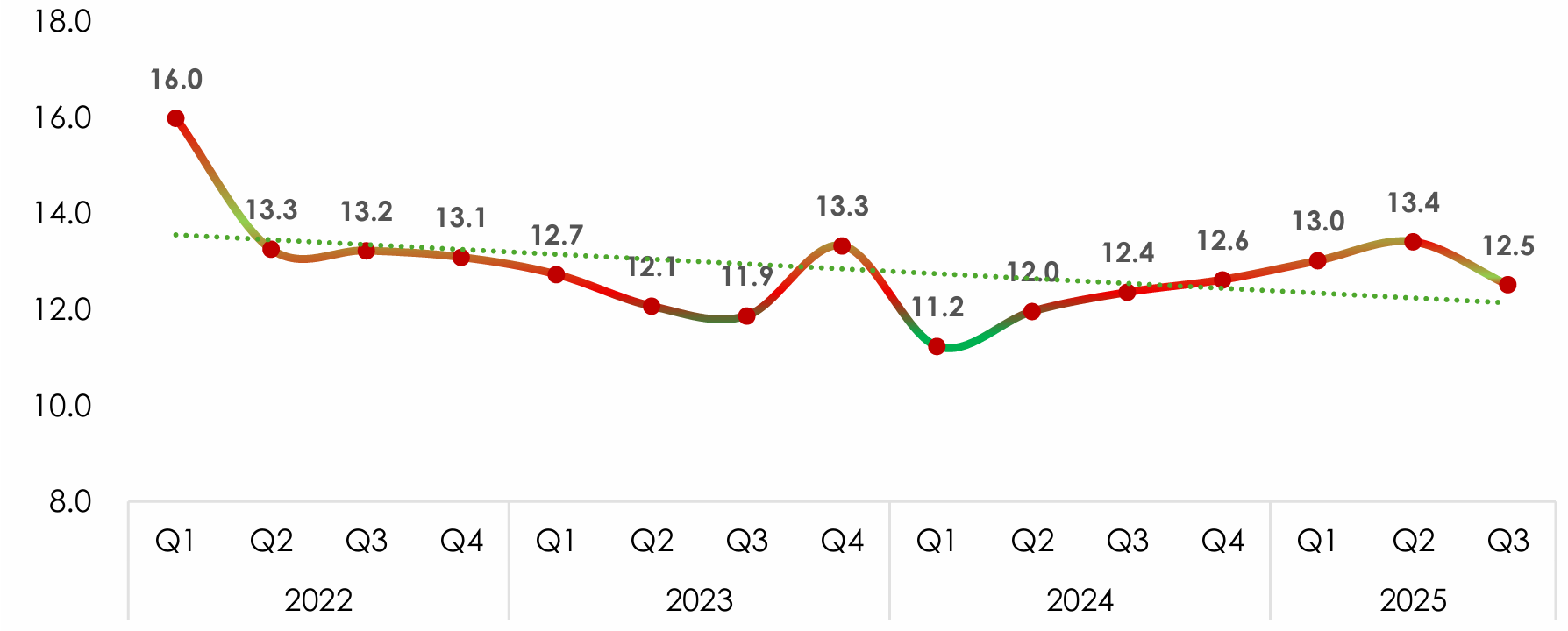
Food insecurity remains elevated in the Upper West, North-East, Savannah, and Volta regions with food insecurity prevalence rates around 50 percent.
Trend of Food Insecure Citizens in Ghana, 2022-2025
Source: GSS (2026)
The policy focus must now be two-pronged: tackle food insecurity and at the same time ensure livelihood empowerment. But to achieve the desirable end, the government must take the bitter pill of operating a “closed economy” (in a phased approach) for certain consumer goods where necessary— especially rice.
The National Food Buffer Stock Company Limited (NAFCO)
NAFCO is a strategic national institution. During the afore-referenced episode of food glut, NAFCO responded, through Government’s fiscal support (of an initial amount of GHS100m). NAFCO’s main problem is that it lacks financial heft. The operational/business model of NAFCO seems problematic. In most instances, NAFCO requires government’s financial support to be able to respond to its mandate of mopping-up excess food supply. How is NAFCO going to build its financial heft?
NAFCO is structured to purchase excess supply of food and build strategic food reserves. As such, it will mostly be on the side of cash outflows (purchasing excess food produce) and will only have cash inflows (revenue) when it sells part of its food stock. Apart from supplying food items to the School Feeding Program, through which it receives cash inflows, it hardly undertakes any other major sales that guarantees stable stream of cash inflow.
It occasionally borrows from the banks to augment its finances. A simple approach but costly approach will be for NAFCO to leverage its stock of food as security (more like the warehouse receipt model) to raise funding from the banks for its operations. But that will also increase the cost of its operations. Neither can it continually rely on government funding support. The argument here is that NAFCO must be made to stand on its own feet. For instance, in building strategic national food stocks, should the focus of NAFCO not move more towards industry-grade food items and less on food-grade commodities? In this way NAFCO can create a strategic link to industries/factories as a key supplier of raw materials, thereby creating another viable business line which can help improve its revenue stream.
Light Industries: A Low-hanging Fruit?
Ghanaian youth desperately need jobs for survival and well-being, for after all the dignity of a man is in his labour. Unemployment, therefore, gravely defies human dignity. It should therefore not be the fate of any Ghanaian youth to remain unemployed, as far as he or she is willing to work to earn a living. But the jobs are few, and most under-pays.
Whenever the talk of job creation and economic development suffices, public policy would normally, and quite naturally, look to “industrialisation” for salvation. It is believed that industrialization is the most plausible avenue for creating high-value jobs, and that industrialisation further leads to quantum leaps in economic development.
Fortunately, Ghana’s economic problems have received sufficient expert diagnosis and impressive scholarly analysis. Yet a sizeable chunk of the problems remains unsolved.
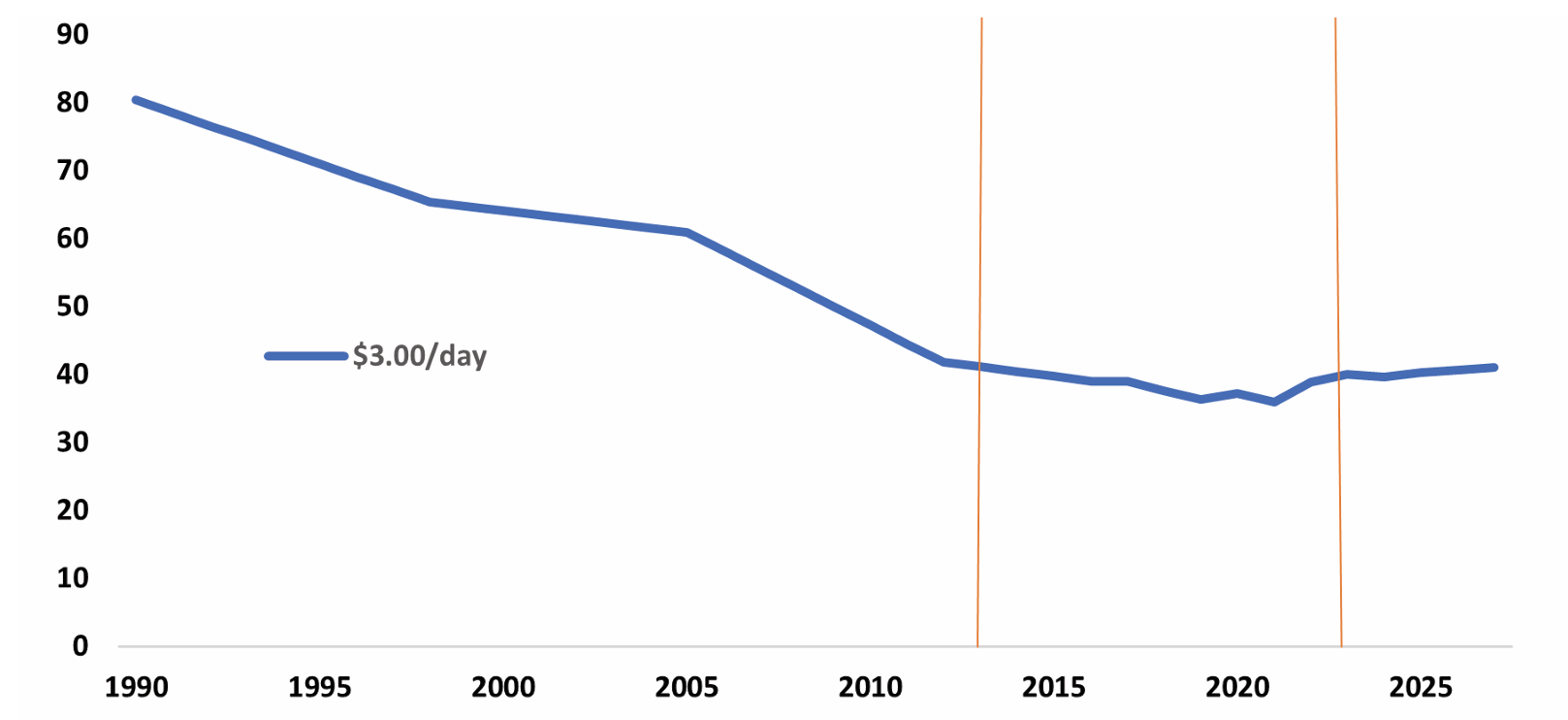
It is trite that Ghana witnessed commendable progress in economic growth, poverty reduction, and human development in the first decade of the twenty-first century, but the decade that followed, saw a decline in economic prospects and a stagnation in poverty alleviation, culminating in the 2022 macroeconomic crisis.
Poverty: Share of Population below International Poverty Line (%)
Source: The World Bank Group (2025)
The World Bank further argues convincingly that “The growing dependency on natural resources and the limited structural transformation brought only marginal productivity gains, with most new jobs emerging in low-productivity sectors such as informal services, mining, and agriculture.” The future of Ghanaian youth hangs on a very delicate balance.
Can Light Industries make any impact? By Light Industries, I am referring to “artisanal” kind of production enterprises where with the combination of advanced technology and superior management, total factor productivity can find concrete positive expression.
Ghana is said to be self-sufficient in four key food commodities, namely: yam, plantain, cassava, and maize. Both the PFJ and FGP enumerate plans to further increase the self-sufficiency ratios of these four food commodities. Can light industries be created linked to the surpluses of such food commodities? But these food items may not necessarily be suitable for industrial processing because they are food-grade. Should the focus for greater self-sufficiency not shift from that of food-grade to industry-grade food commodities?
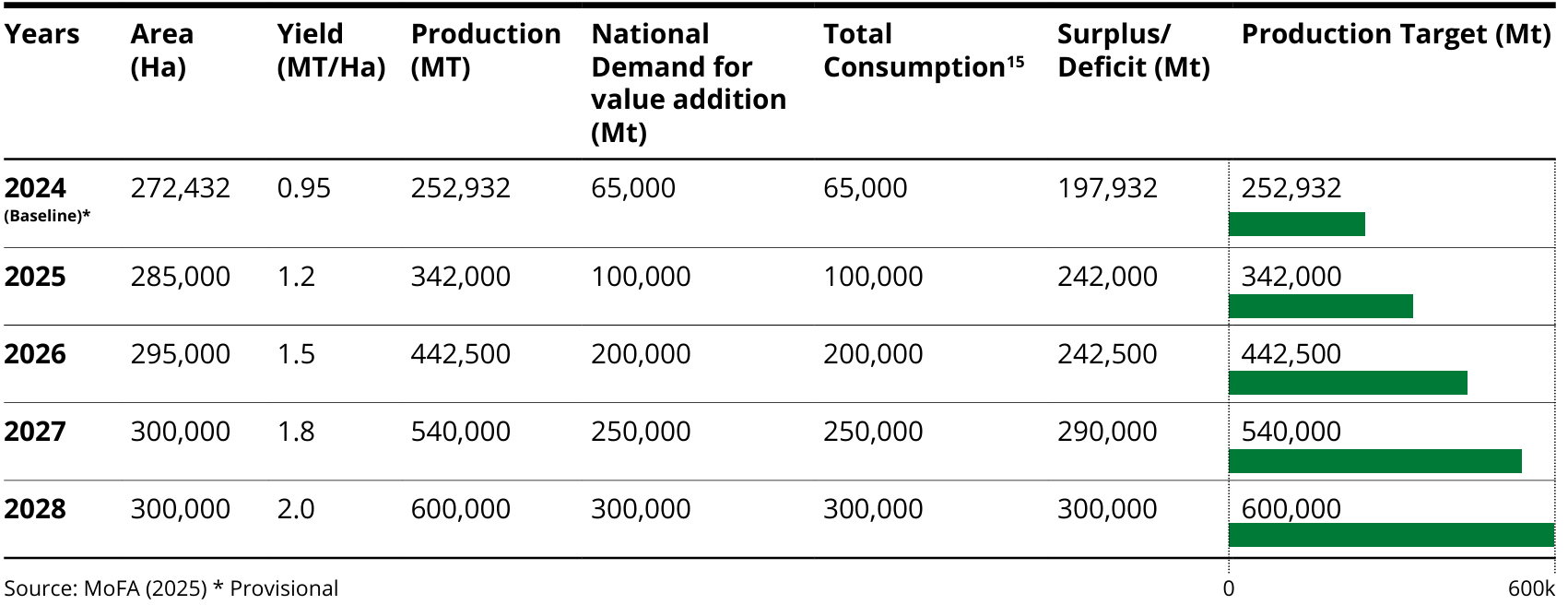
Production Targets for Cashew from 2025-2028
Source: MoFA (2025)
For commodities like cashew, its potential for income generation is that enticing. Little wonder that in 2023, of the “$496.82 million received from the total agricultural NTE sub-sector”, by way of export revenue, $225.7 million came from the export of cashew— that is close to 50% from cashew alone.
The Government’s proposed cashew plan under the Feed Ghana Program is brilliant. But can it be guaranteed of policy resilience which alone can make the plan and program transformative?
Such important cash crops with strong industrial potential as cashew and shea, should be the foundation of rural industrial transformation, through large-scale factories, and through artisanal kind of processing facilities employing the latest technologies and management expertise to ensure efficiency and productivity gains. I stress the essence of total factor productivity in such ventures of artisanal nature.
What these agribusiness enterprises (both farms and processing plants) really require are efficiency and productivity gains which have a multiplier effect and which further leads to cost-efficiency, profitability, and sustainability.
Conclusion
What is policy resilience? By policy resilience, I mean the degree to which policy is grounded in data and facts, and the extent to which policy delivers transformative and durable outcomes in a cost-efficient manner.
The inter-related objectives of PFJ (especially PFJ II) have striking resemblance to those of the Feed Ghana Program, as both programs are aimed at ensuring agricultural productivity, job creation, and food security. The propositions are brilliant on paper, but as to whether these programs will be guaranteed of policy resilience and careful execution to make them transformative is really the policy problem of the day.
A true agricultural transformation is also a function of a renewed and strengthened agriculture financing regime, and this is one area where public policy has been lacklustre and quite ineffective.
Agriculture and its allied industries must be that transformative to make any positive dent on the youth-bulge in Ghana and to meet their employment demands. Ghana’s development trajectory has been too uncoordinated and haphazard calling for strong advocacy for policy resilience. Political grandstanding must give way to policy resilience.
Recommendations
- Government intervention should be measured and calculated:
- The concept of a Farmer-Service Centre (FSC) as a one-stop service hub is clever. “The government will provide the necessary infrastructure, machinery, and equipment for the FSCs, whilst its management will be structured under a Public-Private Partnership (PPP) arrangement guided by the PPP Act 2020. Managers of the FSCs will be classified as anchor operators who will be entrusted with the daily operations of each FSC.” The recommendation is that, the private sector players should not only be involved with management of the FSCs, and that the machinery and related equipment should as well, be provided by them in greater part. This will ensure greater commitment from the private sector players, and it will also help instil in them a greater sense of ownership to ensure sustainability of the enterprise. Furthermore, the idea of agricultural transformation through, Farm Banks, input supply, agro-production enclaves, organized value chains, skills development, and enterprise support, among others, represent significant government interventions with huge fiscal implications. This essay counsels against significant government interventions that occasions or attracts significant fiscal risks and bureaucracy.
- The Bank of Ghana must now work to increase the capital base of Rural and Community Banks such that they can be the main drivers of an integrated financial solution, covering the areas of concessional finance, risk management, and insurance for agricultural enterprises.
- NAFCO should consider making a strategic entry into the industrial real estate sector, investing in silos and warehouses, and even processing facilities which it can also rent out to make additional income. This should help build the finances of NAFCO.
- For cashew and shea, its early-stage industrial potential can be achieved through artisanal industries, to create immediate jobs for the rural folks, whilst the industry awaits large-scale investments from the government or the private sector.
- MoFA’s mandate is that broad, with extremely limited resources. MoFA can focus on one or two commodity value chains and build it to an impactful level using its limited resources and personnel (e.g. rice, maize, and cashew value chains), with NAFCO as the marketing and distribution wing of these commodities. After which the Ministry can focus on another set of commodities. This approach guarantees a meaningful impact and assures value for money, as opposed to the current wholesale approach with truly little to no impact in the agricultural sector.
References
Bank of Ghana. (2026). Summary of Economic and Financial Data. Accra: Bank of Ghana.
GSS. (2026). Food Insecurity Report 2024 Q1 -2025 Q3. Accra: Ghana Statistical Service.
Minstry of Food and Agriculture. (2025, July). Feed Ghana Programme (FGP): A Four-Year Agricultural Transformation Programme (2025 - 2028). Accra: Minstry of Food and Agriculture.
MoFA. (2023). Planting for Food and Jobs Phase II (PFJ 2.0). A Five-Year Master Plan for the. Accra: Ministry of Food and Agriculture.
The World Bank Group. (2025). 2025 Policy Notes. Transforming Ghana in a Generation. The World Bank Group.
What is your reaction?
Share a quick signal with other readers.
Join the Conversation
Share your perspective with the CAPPAD community.
View 0 Comments